01
Toilet flushing
Supply through a separate non-potable network after suitable treatment and disinfection.
Give everyday water a second use. With proper collection, treatment and monitoring, some bathroom wastewater can be reused for non-potable purposes.
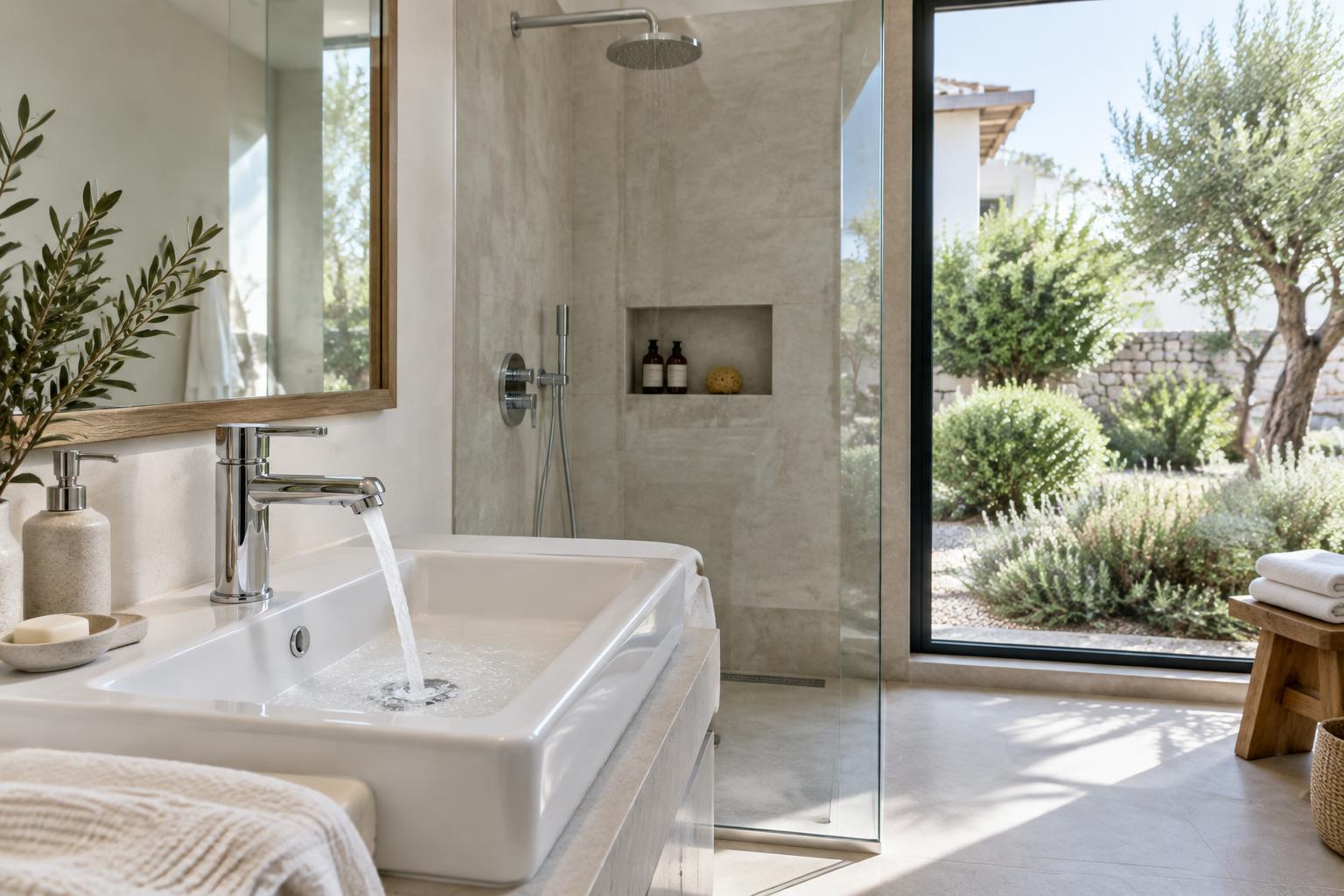
Greywater is wastewater from showers, bathtubs and bathroom sinks. It differs from toilet ‘blackwater’, which is not collected in the same system.
Kitchen wastewater is usually excluded from light-greywater systems because of fats and food residues. Laundry water is assessed separately, based on detergents and treatment technology.
Treated-water quality must meet the requirements of its intended use. Not every application is suitable for every installation.
Supply through a separate non-potable network after suitable treatment and disinfection.
Water selected plantings where water quality, irrigation method and applicable requirements allow.
Assessment for buildings with consistent wastewater from showers and sinks, especially where separate collection is included in the design.
Quality monitoring, maintenance and safe backup supply, without cross-connection to the drinking-water network.
Separate pipes collect suitable wastewater. Mixing with toilet waste is excluded.
Pre-filtration followed by biological or membrane treatment, depending on the load. A simple filter is not enough.
The selected disinfection method is combined with controlled storage and quality checks to reduce risks.
A separate, labelled non-potable network with backflow protection and regular maintenance.
Key requirements, maintenance tips and questions to ask before installation. Print this guide for your discussion with an engineer.
The GTgreen team can assess your property and discuss whether a water-reuse solution is feasible.
Talk to usTell us about your property. Let’s find the right solution, together.